The Class Eight Child

discoveryAt fourteen, the pupils are ‘into’ adolescence: bodily and psychological changes are well underway, so that in general, the young person seems more robust and the tenderness of the previous two years has lessened somewhat. Growth in height and sexual development are clearly established, with the onset of the ‘breaking voice’ in boys and the establishing of the menstrual cycle in girls (though they may have commenced at an earlier age.) At this age, the world of ideas begins to take meaning for the young adolescent and the critical faculties of the 14 year old are noticeably sharper and parts of the accepted framework - particular rules for example - are subject to questioning scrutiny. Counter-balancing this critical tendency, is the emergence of a reasoning or ‘reasonable’ side in the child.

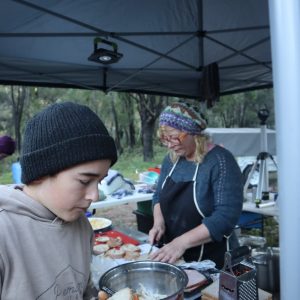
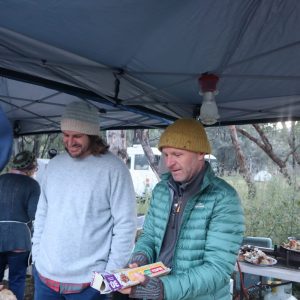
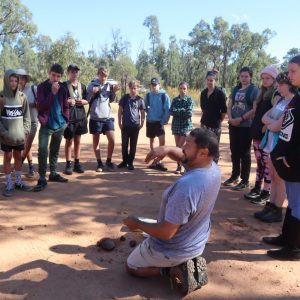
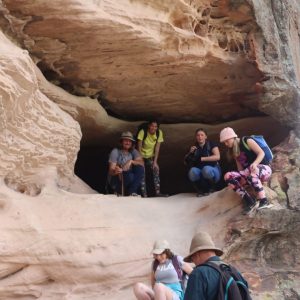
making fire - Class 8 survival camp

Making fire - Class 8 survival camp

The emergence of an independent life of feeling enters the ‘labor and delivery’ phase and the emotional turbulence which may attend this birth represents an important challenge to parents and teachers - how to accompany this birth or beginning of the emancipation of an individualised and independent inner life of thinking, feeling and intention without either being overwhelmed or swamped by the waves and tides of emotions, while being able to recognise that the state of crisis is part of a development.

Both genders now stand before new and unknown vistas with sharpening minds, tender hearts and limbs that struggle to reach accommodation with gravity. By the end of this class, the pupils are already searching for new authorities and role models…… an appropriate time to bring to a close our wonderful journey with these beautiful young people.

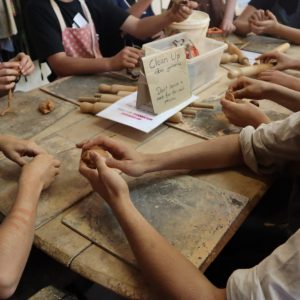
Class 8 Platonic Solids Main Lesson

Class 8 Platonic Solids Main Lesson

Class Eight Main Lessons

English

Letter Writing
Students focus on the written word as expressed through the letter. Biographies and the history of letter writing are investigated. They look at the use of words, constructions in language and writing styles to evoke clarity of expression and communication.

Shakespeare
An in-depth study of his life and work, culminating in the performance of a play; emulating the ‘master’ of language through choral speaking, play-reading, expanding our vocabulary, appreciating poetry etc.

and/or

Legends
Explores the oral language tradition seen through Australian Aboriginal Dreamtime stories and the Creation Myths of our Pacific neighbours.

Science

Human Anatomy
Extending Year 7 work into a study of bones, ligaments, muscles and joints, at rest and in mutual interaction: bringing consciousness right into the structure and movement of the body (in conjunction with Physical Education).

Chemistry - Food Science (see also under PDHPE)
An experiential survey of basic food types - carbohydrate, protein, lipid etc. - related to human dietary needs and the environment; also a study of harmful and addictive substances: increasing the sense of responsibility for self and environment.

Electromagnetism
Building up respect, confidence and interest with the regards to the working and applications of electricity and electro-magnetism, and to place modern achievement within a context of historical evolution involving the input of many human beings.
Or
Hydraulics and Pneumatics
Extending Year 7 mechanics into areas of liquid and gaseous technological application.

Ecology
An introduction to understanding natural ecosystems, their energy pathways and the dynamics of organism interactions within an Australian environmental context.

Maths

Platonic Solids
A geometric and aesthetic study of the Platonic and Archimedean 3-dimensional forms: developing 3-D imagination and finding objective beauty through mathematics.

Business Maths for Everyday Living
By working out of experience the adolescent is able to find the meaning and purpose of applying math to every day life. Situations in life are given to the student, such as “how do I open a bank account “, to setting up “real” life
scenarios.

HSIE

The Industrial Revolution
The emergence of a new consciousness and way of life bringing comprehensive social and environmental change: A history of the development of electricity and magnetism, including biographies, leading to an understanding of basic electro-magnetic appliances (eg. motor, light bulb, bell, generator etc.)linked to the class’s science work (eg. electro-magnetism) and their own internal ‘revolution of consciousness)

The Revolutions- French and American
The struggle for the equality of men in the area of rights and the ideals of freedom, equality and brotherhood. Biographies of leaders of the times give a perspective of what brought the revolutions to a head.
“the struggle to be independent and at what cost”

The Lay of the Land: Geological Studies 1
Looking at the Earth’s origins to what makes up the Earth, to the local area in which we live gives a historical and geographical perspective to the emerging adolescent. “a sense of place in the world”

East and West
Contrasting ways of life and thought within the context of a world geography: exploring polarities within the world and self (female/male, right/left hemispheres of the brain, intuitive/logical etc.)

PDHPE

Food Chemistry (see under Science)
A focus on diet and nutrition - including the quality of food - as a foundation for healthy.

Human Anatomy (See under Science)
Understanding the physical basis for uprightness, movement and agility.

Business Math in Everyday Living
A focus on and an understanding of how we use maths in everyday applications through scenarios set up in class.